 MASCULR
The Evidence File
Creatine monohydrate
3–5 g a dayShort-term use often significantly increases strength and power in short, hard efforts. It does little for endurance. Monohydrate is the most studied form and no other form has been shown to be better. Expect 1–2 kg of weight gain in the first month, mostly water.
Worth it if you lift or sprint. [1] NIH ODS, exercise
Protein
Up to about 2.0 g per kg of body weight a day, food includedSupports the training response and recovery. A powder is just food in a tub. It helps only if your meals fall short.
Worth it if your diet is low in protein. [1] NIH ODS, exercise
Caffeine
Up to 400–500 mg a day for adultsMight improve performance in endurance activity when taken beforehand. Pure caffeine powder is dangerous. A dose of 10–14 g can kill.
Works for endurance. Coffee is a source. [1] NIH ODS, exercise
Magnesium
Men need 400–420 mg a day in total. Supplement limit: 350 mg a dayAbout 48% of Americans get less than the estimated requirement from food. Citrate, aspartate, lactate and chloride are absorbed better than oxide. The NIH fact sheet makes no sleep claim, so treat sleep marketing with caution.
Useful to fill a gap in your diet. [2] NIH ODS, magnesium
Vitamin D
600 IU a day. Upper limit 4,000 IUNearly everyone is sufficient at a blood level of 20 ng/mL (50 nmol/L) or more. Vitamin D alone appears to have no effect on fracture risk, and trials do not support it for reducing cancer risk.
Get a blood test first. [3] NIH ODS, vitamin D
Omega-3 (fish oil)
FDA says labels should not recommend more than 2 g EPA+DHA a dayAt 1 g a day it did not significantly cut major cardiovascular events in healthy adults in the VITAL trial. Two large trials at 4 g a day saw slightly more atrial fibrillation in people with, or at high risk of, cardiovascular disease. One to two servings of seafood a week is the better-supported advice.
Eat fish. Supplement on a doctor's advice. [4] NIH ODS, omega-3
Zinc
Men need 11 mg a day. Upper limit 40 mgMost adults get enough. About 15% fall below the estimated requirement. Taking 50 mg or more for weeks can block copper absorption.
Only if your intake is low. [5] NIH ODS, zinc
Beetroot / nitrate
About 2 cups of juice in studiesMight improve endurance to some degree, mainly in recreationally active people who are not trained athletes.
Modest. Optional. [1] NIH ODS, exercise
Beta-alanine
1.6–6.4 g a day in studiesResults are inconsistent for short, intense events. Little or no benefit for efforts longer than 10 minutes. Causes tingling at 800 mg and above.
Mixed. [1] NIH ODS, exercise
BCAAs
20 g a day or less in studiesLittle evidence for endurance performance. A possible benefit for muscle and strength. Any complete protein already contains them.
Skip if you eat enough protein. [1] NIH ODS, exercise
Ashwagandha
Varies by extractMay reduce stress and improve sleep in small, short trials. Long-term safety is not known. It has been linked to cases of acute liver injury and may affect thyroid function.
Short-term at most. [6] NIH ODS, ashwagandha
Testosterone booster blends
Researchers checked 50 products. 90% claimed to boost testosterone. 24.8% had published data showing an increase. 61.5% had no data at all. 13 products exceeded the upper limit for zinc, vitamin B3 or magnesium.
Not supported. [7] Clemesha 2020
Tribulus terrestris
No effect on strength, lean body mass or sex hormone levels in short trials. Safety is not well studied.
Not supported. [1] NIH ODS, exercise
Deer antler velvet
Virtually no evidence it improves performance. Some products have been found to contain IGF-1, which is banned in sport.
Not supported. [1] NIH ODS, exercise
Glutamine
No effect on muscle performance or body composition in weightlifters.
Not supported for muscle. [1] NIH ODS, exercise
Arginine and citrulline
Arginine has little to no effect on performance. Citrulline has little research support.
Not supported. [1] NIH ODS, exercise
Doses are the ones described in the cited sources, for healthy adults. This is education, not medical advice. Talk to a doctor before starting a supplement, especially if you take medication or have a health condition.
Questions men ask
Do testosterone boosters work?
A 2020 review checked 50 "testosterone boosting" supplements against the published research. 90% claimed to boost testosterone, 24.8% had published data showing an increase, and 61.5% had no data at all. 13 products exceeded the upper limit for zinc, vitamin B3 or magnesium. That is why Masculr does not sell one. [7] Clemesha 2020
How much creatine should I take a day?
The NIH describes two routines. With loading: 20 g a day in four 5 g portions for 5–7 days, then 3–5 g a day. Without loading: about 3–6 g a day for 3 to 4 weeks. Loading is optional. [1] NIH ODS, exercise
Is creatine monohydrate better than other forms of creatine?
Creatine monohydrate is the most widely used and studied form. Other forms have not been shown to be better at raising muscle creatine levels. [1] NIH ODS, exercise
Does magnesium help you sleep?
The NIH magnesium fact sheet makes no statement about sleep. What it does say: about 48% of Americans get less magnesium from food than the estimated requirement, and the upper limit for magnesium from supplements is 350 mg a day for adults. [2] NIH ODS, magnesium
Should I take vitamin D?
It depends on your blood level. A level of 20 ng/mL (50 nmol/L) covers the needs of 97.5% of people. Adults up to 70 need 600 IU a day, and the upper limit is 4,000 IU a day. A blood test from a doctor will tell you where you stand. [3] NIH ODS, vitamin D
How much caffeine should I take before a workout?
The studied dose is about 2–6 mg per kg of body weight, taken 15 to 60 minutes before exercise. It is more likely to help endurance activity than sprinting or lifting. 400 mg a day does not usually cause dangerous effects in healthy adults, and 500 mg a day or more might hurt performance instead of helping. [1] NIH ODS, exercise
Do I need BCAAs if I already eat enough protein?
Probably not. BCAAs make up about 25% of the amino acids in complete protein foods such as meat, fish, eggs and milk, and there is little evidence that BCAA supplements improve endurance performance. [1] NIH ODS, exercise
Does Masculr sell supplements?
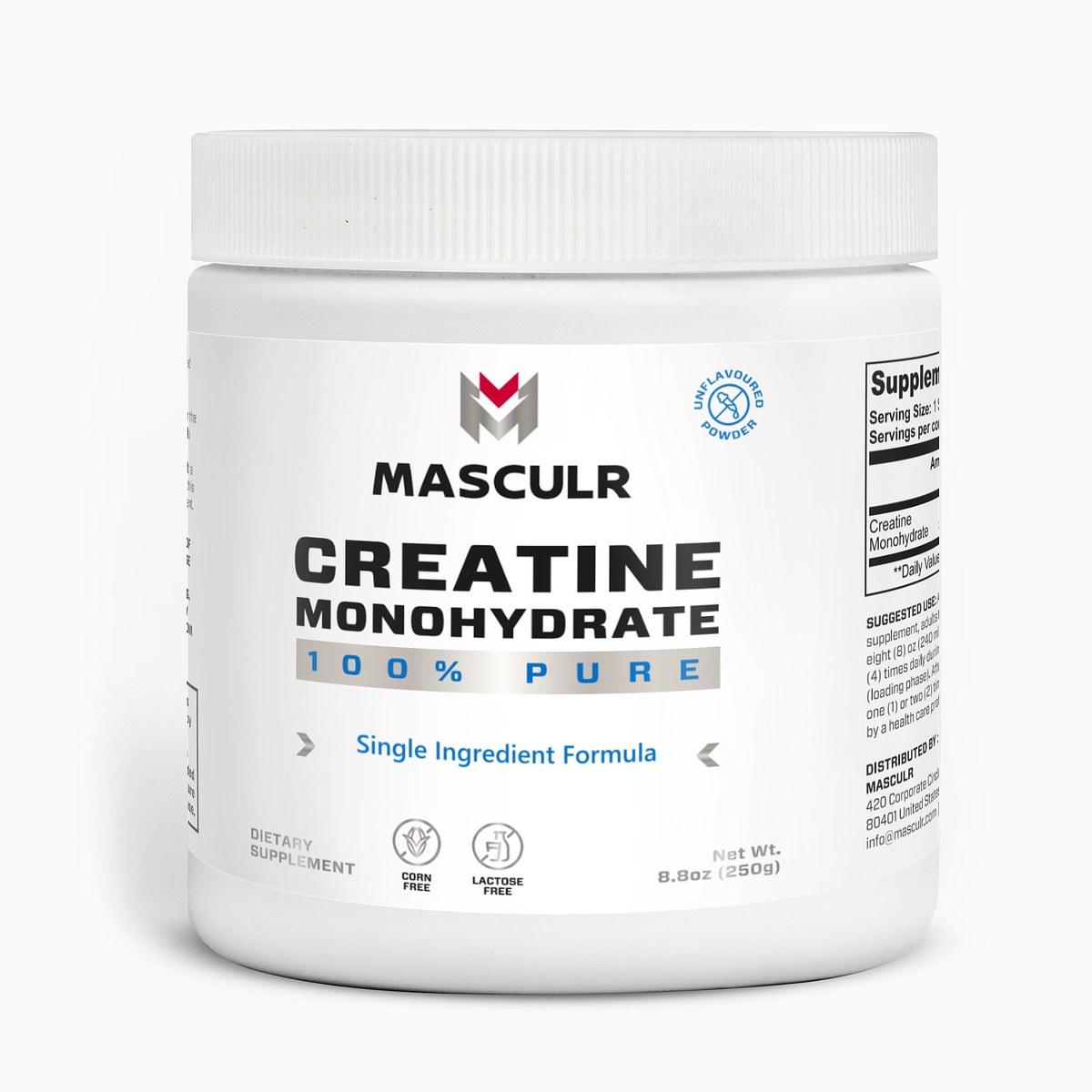
Yes. Masculr sells plain creatine monohydrate. That is a conflict of interest, which is why every verdict on this page links to a government or journal source instead of our own opinion.
Our conflict of interest
Masculr sells supplements, starting with plain creatine monohydrate. That gives us a reason to tell you creatine works. It's why this page cites government and journal sources instead of our own opinion, and why it lists things we could sell but won't.
Get one verdict a week
One supplement, what the research says, and whether it's worth your money.
Sources
- NIH ODS — Dietary Supplements for Exercise and Athletic Performance
- NIH ODS — Magnesium
- NIH ODS — Vitamin D
- NIH ODS — Omega-3 Fatty Acids
- NIH ODS — Zinc
- NIH ODS — Ashwagandha
- Clemesha et al., "Testosterone Boosting" Supplements Composition and Claims Are not Supported by the Academic Literature, World J Mens Health, 2020